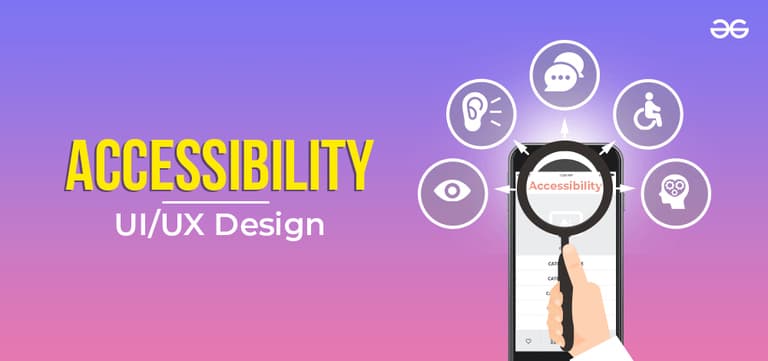
Accessible Design for Everyone
Accessibility in design isn't just a nice-to-have feature or a compliance checkbox—it's a fundamental aspect of creating products that truly serve all users. When we design with accessibility in mind, we're acknowledging that people interact with technology in diverse ways.
The principles of accessible design benefit everyone, not just users with permanent disabilities. Consider how voice interfaces, originally developed for blind users, are now mainstream through virtual assistants. Or how captions, essential for deaf users, are regularly used by people watching videos in noisy environments or learning a new language.
Implementing accessibility starts with understanding the guidelines (such as WCAG) but goes beyond compliance to empathy and inclusion. This means considering keyboard navigation, screen reader compatibility, sufficient color contrast, clear information hierarchy, and alternative text for images.
Testing with real users who have disabilities provides invaluable insights that automated tools can't capture. Their experiences and feedback often reveal issues and opportunities that wouldn't otherwise be apparent.
By integrating accessibility from the beginning of the design process rather than treating it as an afterthought, we create more robust, flexible, and usable products. This approach not only serves a wider audience but often results in better design solutions for everyone.